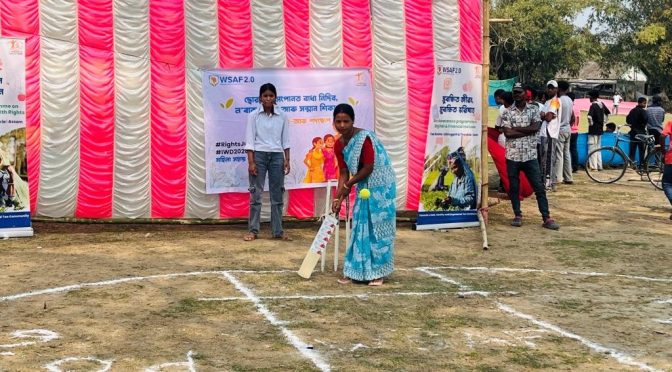
Programme: Women Safety Accelerator Fund (WSAF)
The Women’s Safety Accelerator Fund 2.0 builds on its earlier phase to drive systemic change in addressing gender-based violence and fostering safe, dignified workplaces across India’s tea sector through a holistic, survivor-centred approach. By strengthening redressal systems, expanding thematic interventions, and building strong partnerships, it promotes access to sexual and reproductive health services, sustainable livelihoods, digital and financial literacy, psychological safety, and robust grievance mechanisms. To deepen community awareness and engagement, innovative approaches are essential. ‘Cricket for Change’ stands out as a unique and effective tool, using sport to engage communities, spark dialogue, and reinforce knowledge around women’s safety, rights, and empowerment.
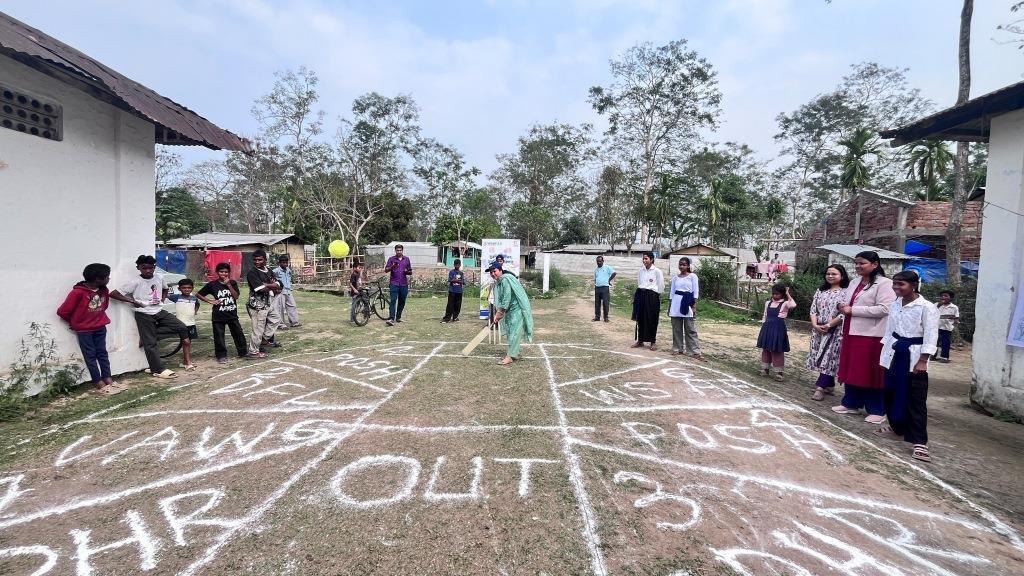
Cricket in India has always been more than just a game. Today, it is also becoming a powerful platform for social change. Encouraging women to participate in sports is no longer simply a trend or symbolic gesture. It is an important step toward building women’s confidence, leadership, and equal participation in society. Such initiatives directly echoed the spirit of International Women’s Day 2026 and its global theme, “Rights, Justice, Action,” which called for strengthening women’s rights, ensuring justice, and encouraging meaningful actions that empower women in every sphere of life.
On the eve of International Women’s Day, we organised a unique cricket match across three tea estates—Nahorkutia, Dinjoye and Dinjan Tea Estates in Assam. Unlike conventional formats of cricket, this game was specially designed to promote learning and reflection. The cricket match integrated key thematic pillars including Sexual and Reproductive Health and Rights (SRHR), Violence against Women and Girls (VAWG), gender equality, digital inclusion, financial inclusion, PoSH (Prevention of Sexual Harassment), and livelihood opportunities. Through these themes, the activity highlighted women’s rights, the need for justice and protection from violence, and practical actions that communities can take to support women’s empowerment.
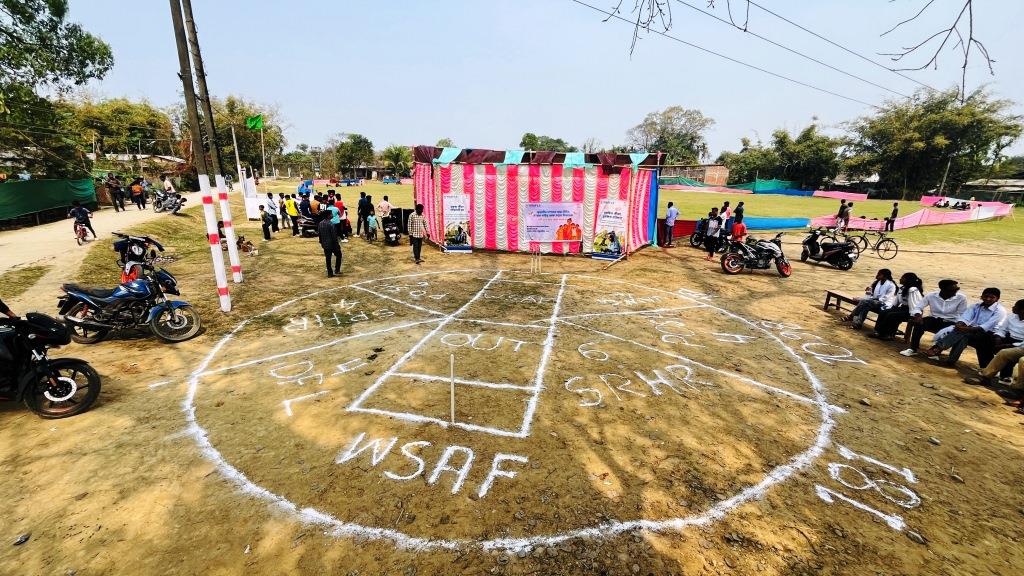
The rules of the game were slightly different from traditional cricket. Each participant was given six balls to play and was encouraged to score as many runs as possible within those deliveries. The highest scorer was rewarded. Instead of fielders, the ground had designated zones marked with runs such as 6, 4, and 2, each linked to different thematic pillars of awareness. Cricket field positions such as cover, point, mid-on, mid-off, and square leg were used as symbolic zones representing these themes.
An important concept integrated into the game was “knowledge fencing.” The idea behind this concept was when individuals are equipped with the right knowledge, they become safer and more empowered to protect themselves from different forms of violence and exploitation. Participants were informed about critical helpline numbers such as the Women Helpline (181), Emergency Response (112), Child Helpline (1098), and Cyber Fraud Helpline (1930), ensuring that information related to rights and protection mechanisms remains accessible in times of need. This knowledge is an essential step toward achieving justice and safety for women and children.
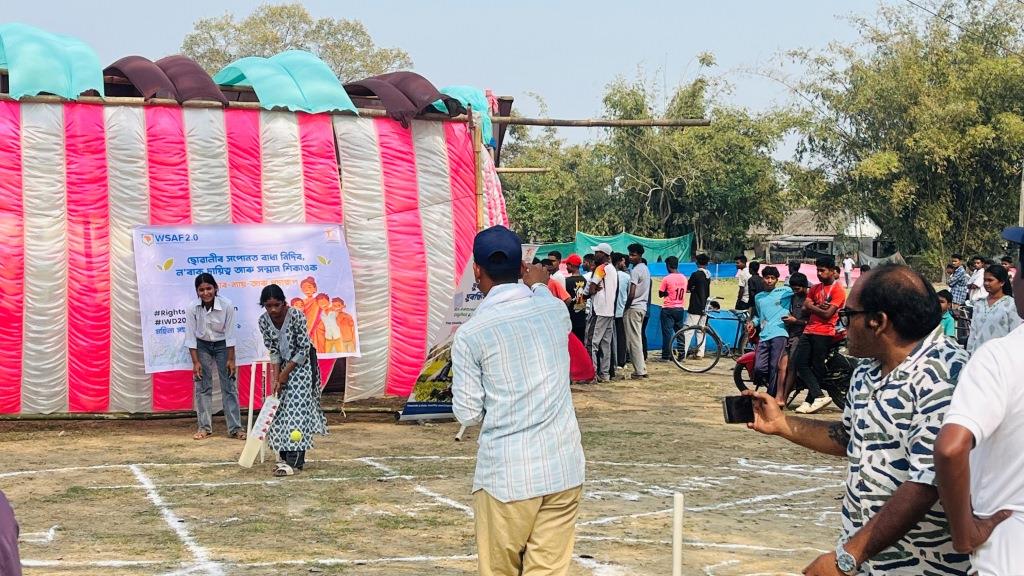
Another key feature of the event was its gender-inclusive approach. Both men and women were encouraged to participate, reinforcing the idea that gender equality is a collective responsibility. The match brought together participants from different age groups onto a single pitch, creating a vibrant and inclusive atmosphere within the tea estate communities.
For many women participants, this was the first time in their lives that they held a cricket bat. Despite the novelty, they played with enthusiasm and determination, scoring impressive runs and demonstrating remarkable confidence.
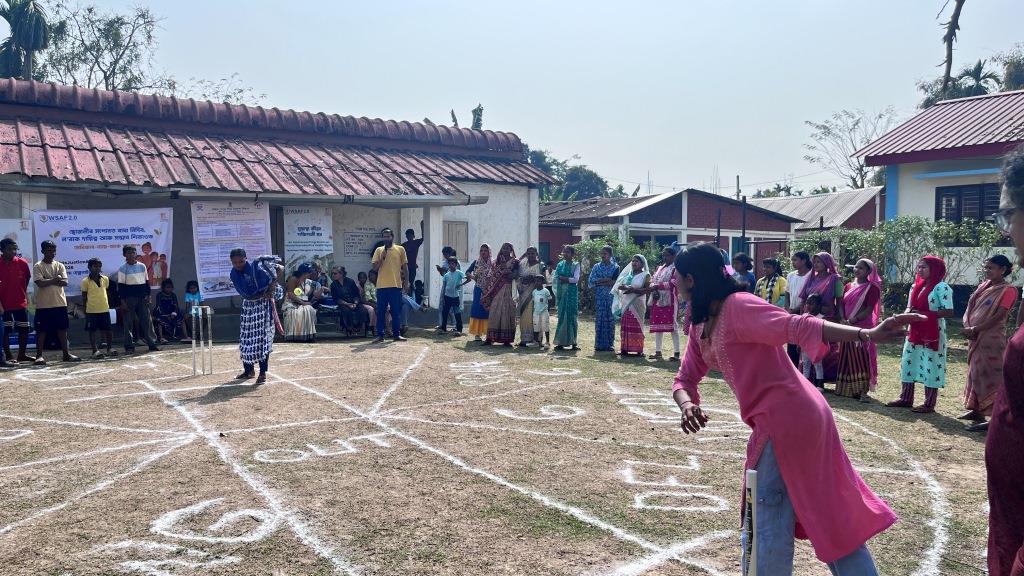
“Cricket is not unknown to anyone, but this was the first time experiencing the game within the boundaries of various social messages. It felt like learning while playing. Through the game, we learned about the women’s helpline number, child helpline number, Internal Committee, and sexual and reproductive health rights.” — Somaru Sobor, Secretary, Dighalijan unit | Dinjan TE.
“Scoring runs with the bat based on thematic areas—such a nice and innovative concept. Engaging the community in this way, through sports and play, is truly remarkable.” – Narmada Das | ICDS Supervisor | Nahorkutia
Through this initiative, cricket became more than a sport—it became a medium for learning, empowerment, and social transformation. By promoting awareness, strengthening knowledge of rights, and encouraging community action, the event truly reflected the spirit of “Rights, Justice, Action,” reminding us that meaningful change can begin even on a small cricket pitch.
#RightsJusticeAction
#WSAF
#idh
Author: Santu Guchait