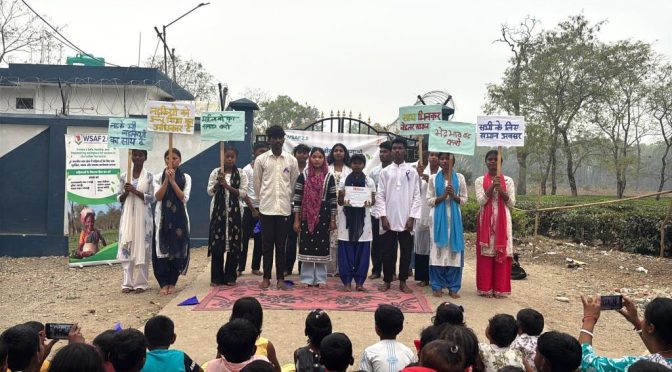
There are stories we hear, and then there are stories we live with every day—so common that they almost become invisible. This dance drama was born out of one such reality.
While working with the tea communities in West Bengal under Women Safety Accelarator Fund I witnessed how a girl’s world is often defined for her before she even begins to dream. Education for boys is seen as an investment, while for girls, it is often treated as optional. Responsibilities come early, choices are limited, and aspirations are quietly set aside. It is not that girls lack the ability or ambition—it is that they are rarely given the space to imagine a different future.
But what if that could change? This question was raised by a 14-year-old adolescent girl during our intervention with adolescent groups at Batabari Tea Estate. She asked: What if families began to believe in their daughters the same way they believe in their sons? What if girls were encouraged to dream freely and boys stood beside them in support? The solution, in many ways, lies not just in awareness, but in shifting mindsets—within homes, within communities, and among the younger generation.
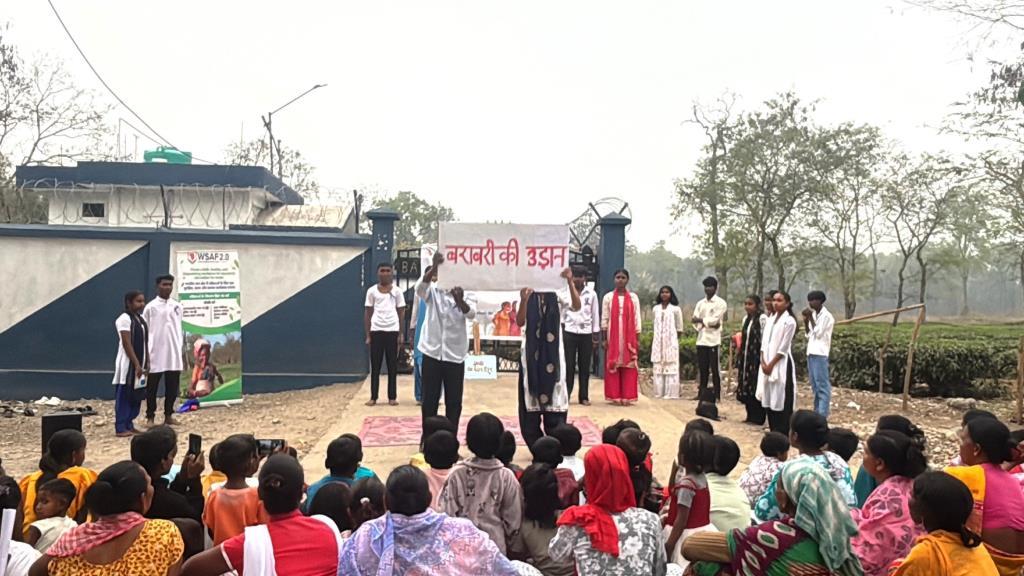
This is where the idea of “बराबरी की उड़ान” took shape.
Instead of bringing in an external narrative, we felt it was important that the story come from within the community itself. Who better to speak about these realities than the people who experience them every day? The dance drama became a platform where they could express their own struggles, their own questions, and their own vision for change—speaking to their own people, in their own voice.
And so, the story unfolded.
At the center was a young girl with a simple yet powerful dream—to study, grow, and one day become a pilot. Her journey, however, was filled with hesitation at home, quiet discouragement, and moments of self-doubt. Through the performance, her emotions reflected both the weight of expectations and the strength it takes to keep dreaming.
As the story unfolded, it imagined a shift—one where her family begins to support her and her dreams are encouraged. Her aspiration to fly became more than a goal; it turned into a symbol of freedom and equality, representing the dreams of many girls like her.
Equally powerful was the presence of boys in the story. They were not just observers but participants—standing beside the girls, supporting them, and challenging the very norms that often go unquestioned. This itself became a strong message: equality is not a one-sided effort, but a shared responsibility.
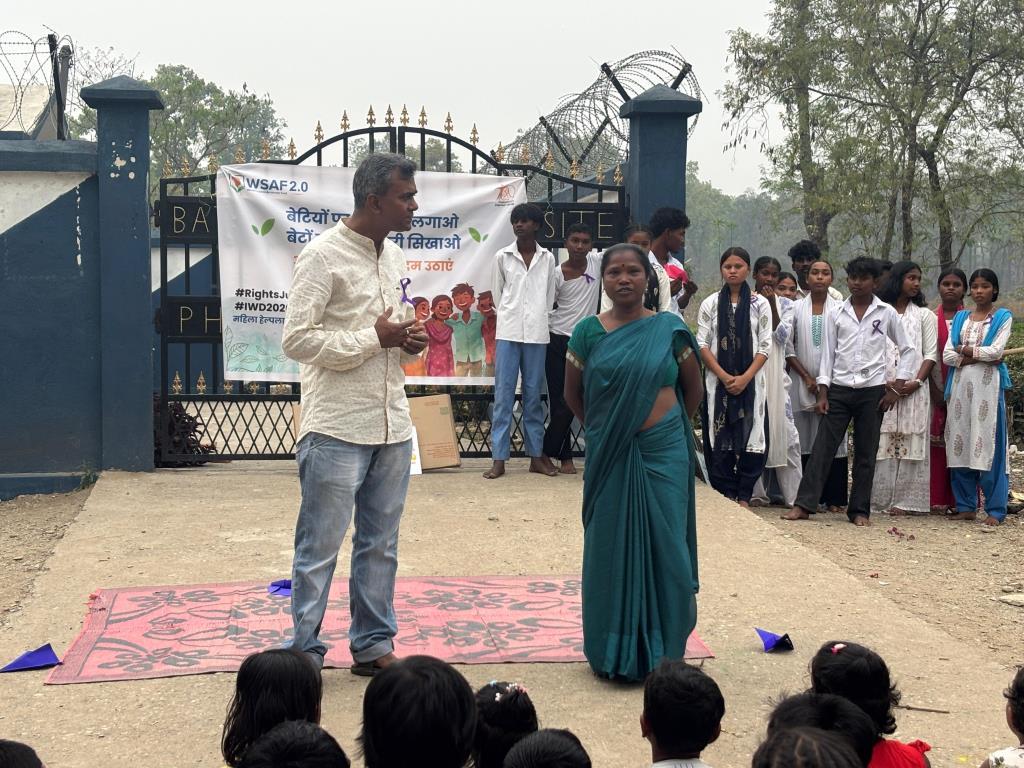
What made this experience truly meaningful was what happened beyond the stage.
On the day of the performance, the tea garden community gathered with curiosity and interest. People stood around, watched attentively, and stayed engaged till the very end. It was not just a performance—it became a shared moment of reflection.
The response from the community was honest and significant. Many openly acknowledged that girls are often held back—not because they are incapable, but because they are not given the opportunity or exposure. At the same time, there was a visible shift in perspective. People were not just watching a story; they were recognizing their own realities within it.
Among the most encouraging aspects was the participation of adolescents and youth. Their energy, confidence, and willingness to express stood out. Through this process, they were not only performing—they were questioning, learning, and engaging in conversations that matter.
In the end, “बराबरी की उड़ान” became more than just a dance drama.
It became a voice, a mirror, and a possibility.
Because when people begin to tell their own stories, acknowledge their own realities, and imagine their own solutions, change is no longer distant.
And when dreams are supported, they don’t remain grounded.
Author – Auishani Roy