From 5–7 August 2026, the library of Taman Ismail Marzuki in Jakarta filled with people who came together with something that cannot always be found in books: stories carried by people. They came from different parts of Asia and beyond, bringing songs, dances, rituals, memories and ways of understanding the world that have been passed from one generation to another. The Lisan XIII Symposium and Festival of Oral Traditions, organised by the Asosiasi Tradisi Lisan (Oral Tradition Association), brought researchers, artists, cultural practitioners and tradition bearers together to listen, share and explore how these living traditions continue to find their place in the world today.
From the Seminar Room to the Stage
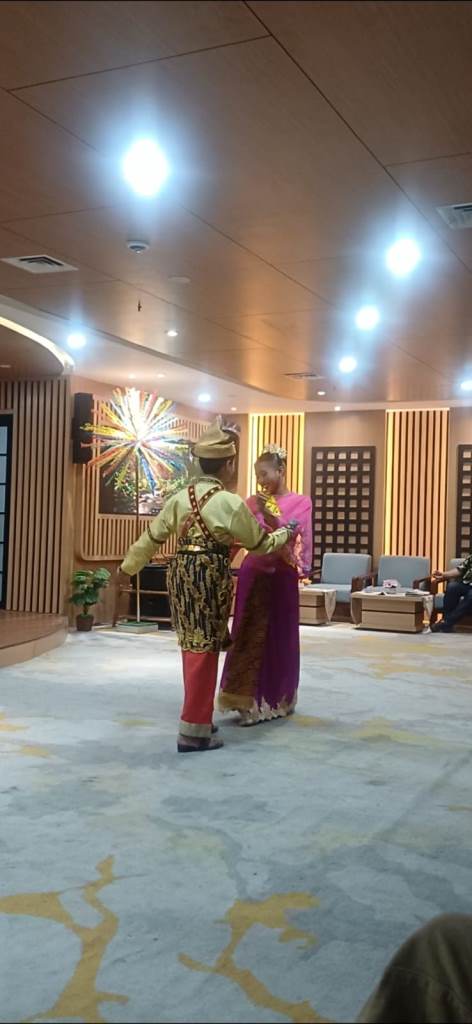
On August 5, the opening programme brought together representatives from the cultural sector and academia in Indonesia. This was followed by a cultural evening featuring Gambang Rancag/Kromong performance, Seraikela Chhau performance from India, and Besutan performance from Surabaya.
This movement between discussion and performance continued throughout the event. The symposium was not structured only around academic presentations. Performances were placed alongside the discussions, allowing participants to experience some of the traditions being discussed rather than encountering them only through papers or documentation.
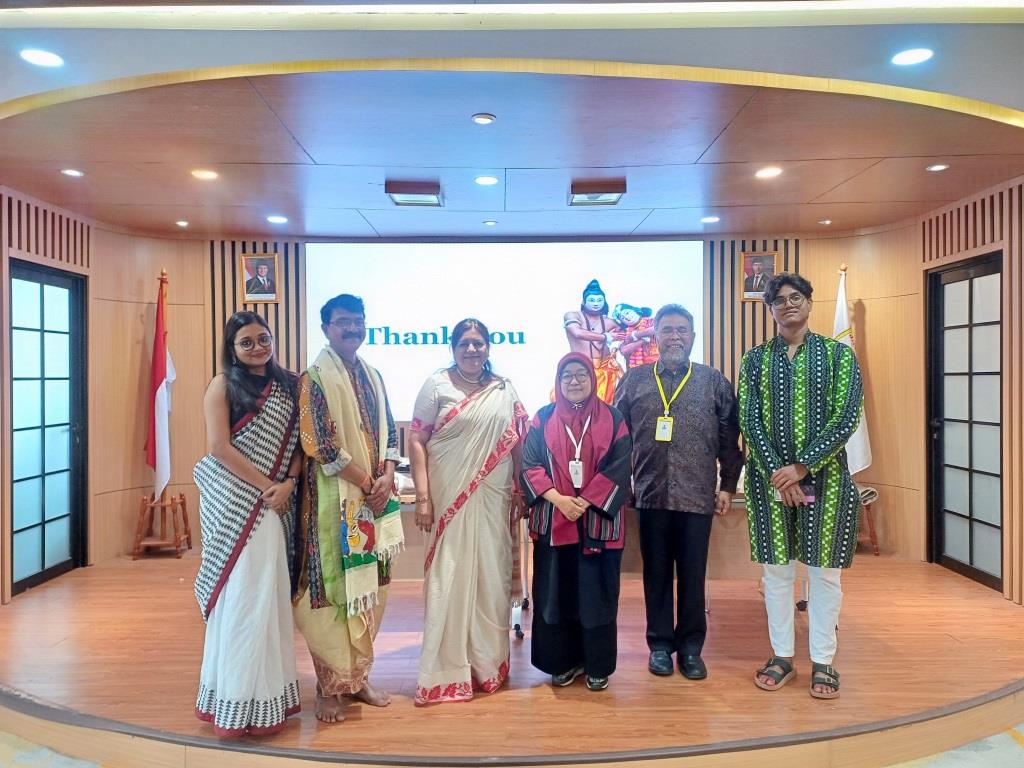
On 6 August, the festival programme brought together Seraikela Chhau performance, the Papua Yosim Pancar community dance and Silek Harimau an ancient martial tradition. The final evening featured Besutan performance from Surabaya and Wayang Bangsawan theatre performance from Singapore.
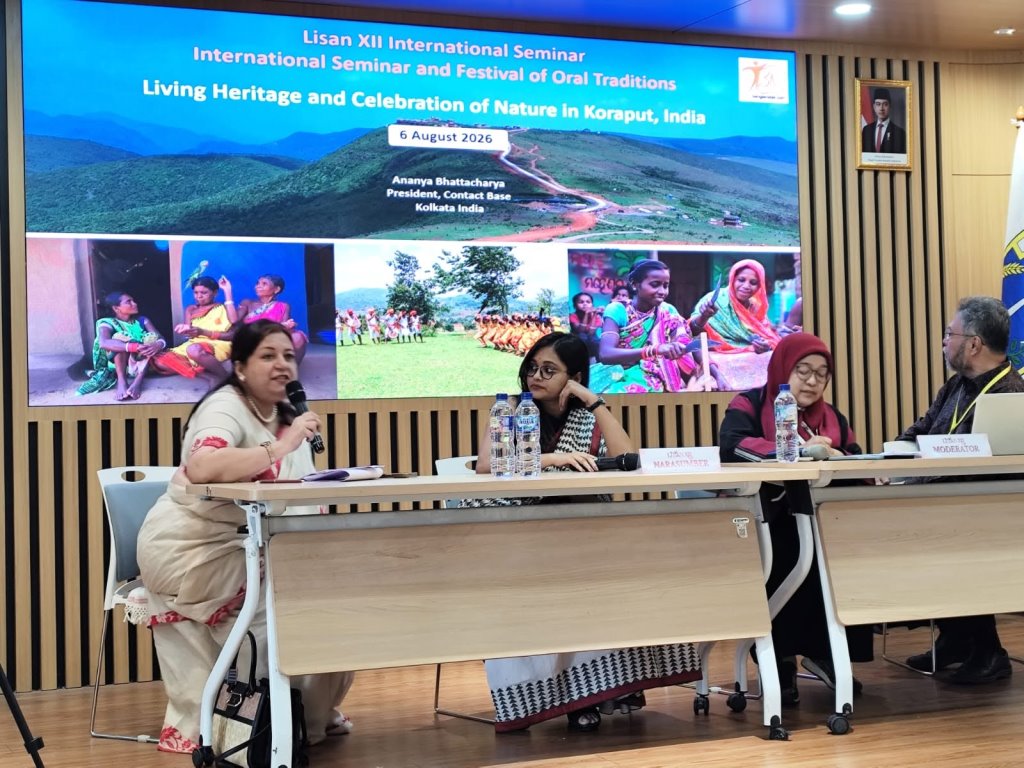
The symposium brought together participants from a number of countries and professional backgrounds. Speakers included people working in research, cultural institutions, archives and community-based practice from Indonesia, India, Malaysia, Singapore, Switzerland, Sweden and Brunei. In one of the panels Ananya Bhattacharya and I represented India, and our work in Odisha’s indigenous communities and Chhau tradition.
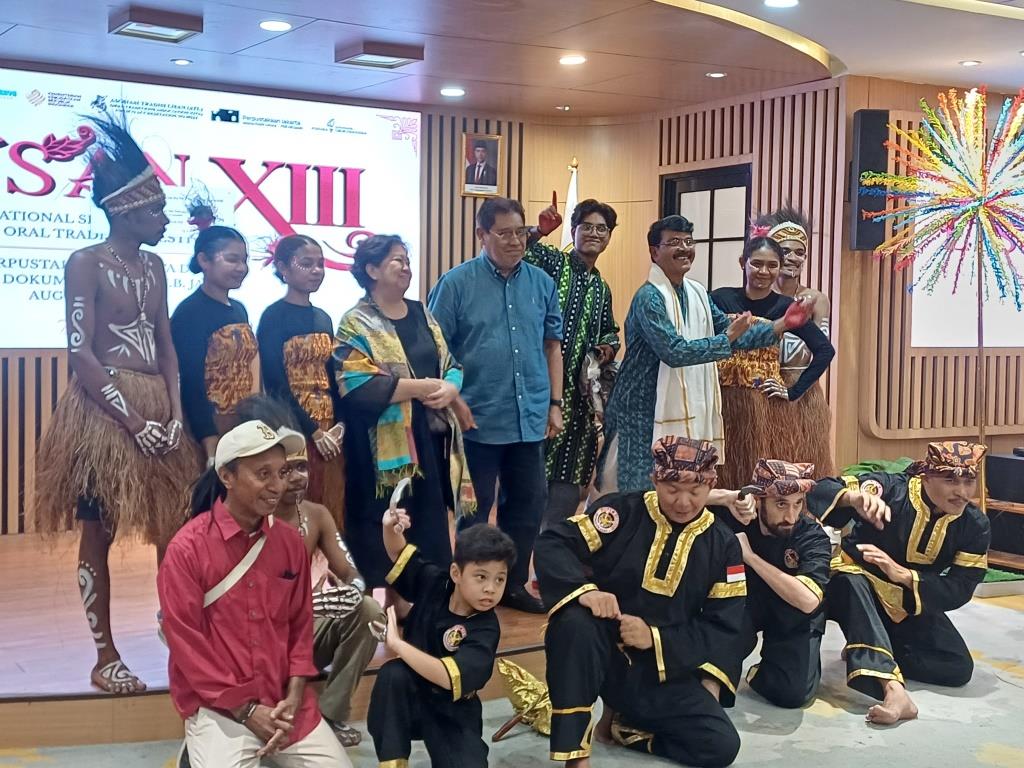
Alongside the main panels, the symposium had a series of parallel sessions, conducted in both Indonesian and English. This created space for participants to present different areas of research and practice, while allowing conversations to develop across disciplines and regions. It was interesting to see how differently oral traditions are approached in different contexts.
Bringing Odisha into the Conversation
For Banglanatak dot com, the event also provided a platform to bring perspectives from its work with Indigenous and traditional communities in Odisha. Ananya Bhattacharya shared our experiences from Koraput highlighting the close connections between oral traditions, everyday life and the natural environment.
Home to several Indigenous communities, including the Durua, Paroja, Gadaba and Kandha, Koraput is also recognised by the FAO as a Globally Important Agricultural Heritage System for its rich agrobiodiversity and traditional farming practices. The presentation looked at how this relationship with nature is expressed and sustained through everyday cultural practices. Rituals, songs, dances, festivals and customary practices are not separate from the landscape. They carry knowledge about forests, agriculture, seasons, food and community life. These traditions also guide how people interact with and care for their surroundings. In this sense, oral traditions are not only ways of preserving cultural memory but can also act as community-based systems of knowledge and stewardship, connecting cultural continuity with biodiversity and resilience.
What Chhau Can Tell Us About Nature
A similar relationship can be seen in Seraikela Chhau, where movements and palas draw inspiration from the natural world, transforming observations of everyday life into a distinctive performance language. Its movement repertoire takes cues from the gait, behaviour and qualities of animals, birds and other elements of nature, translating these observations into precise and highly stylised movements, postures, footwork and gestures. The use of masks adds another layer to the tradition’s material culture. Traditionally made using soil collected from the Kharkei riverbed and natural pigments, the masks themselves reflect a close relationship with the local landscape and available materials.
The tradition is also closely connected to Chaitra Parab, a festival marking spring, seasonal transition and agricultural renewal, placing the dance within a larger cycle of nature and regeneration. From its earlier martial associations to its evolution as an expressive performance tradition, Seraikela Chhau demonstrates how living heritage can adapt over time while continuing to carry memories, values and ways of understanding the world.
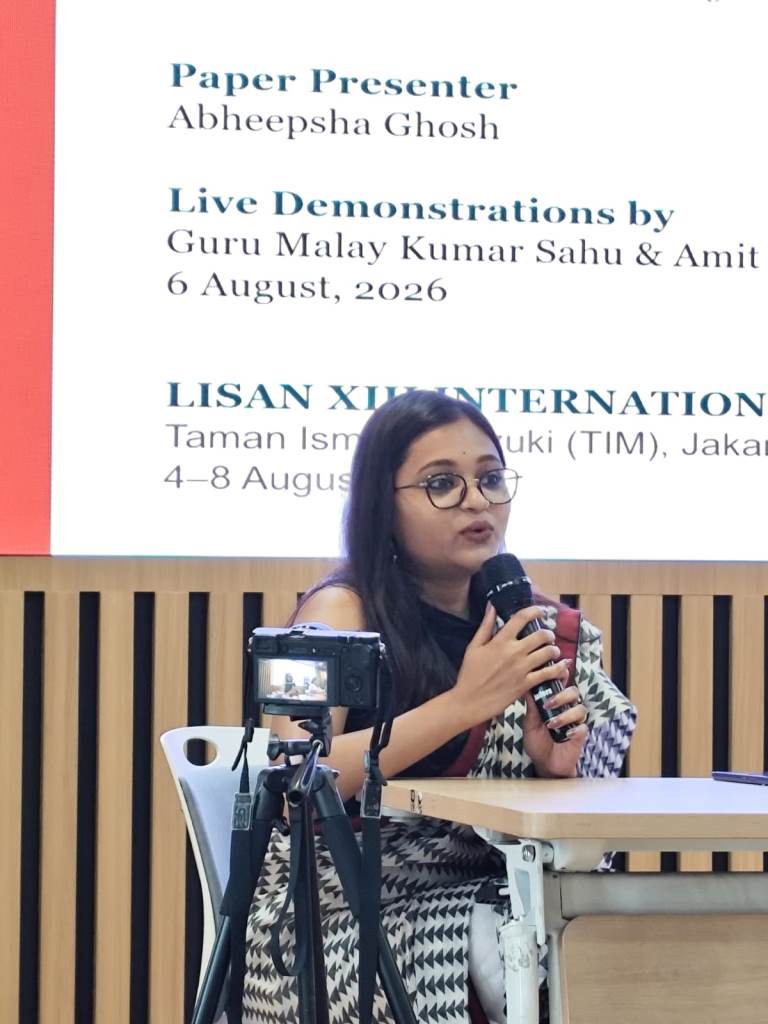
My presentation on Seraikela Chhau was accompanied by a live demonstration by Guru Malay Kumar Sahu and Amit Kumar Sahu, who brought the movement vocabulary and ideas discussed in the paper to life. Their demonstration and explanations gave audiences and participants from different backgrounds an opportunity to experience the form directly and understand the knowledge embedded within its movements, narratives and performance traditions.
What We Take Back
Bringing people from different regions together also showed how many questions around living traditions are shared. Whether working with Chhau in India or oral traditions in Indonesia, Malaysia or Brunei, concerns around transmission, community participation, documentation, changing audiences and continuity often overlap, even when the traditions themselves are very different.
Lisan XIII created space for these connections, between research and practice, documentation and performance, and traditions from different parts of Asia. It also reminded us that oral traditions do not exist in isolation. They are closely connected to landscapes, livelihoods, histories, belief systems, communities and everyday life.
One of the most interesting takeaways was seeing how stories travel across borders and become part of new cultural settings. Indonesia, with its 38 provinces and extraordinary Indigenous and ethnolinguistic diversity, has a particularly rich history of cultural exchange. The Ramayana and Mahabharata, for instance, have travelled across Southeast Asia and been embraced, adapted and reinterpreted through local traditions. Their stories continue to find expression in performance, ritual, theatre, dance and storytelling. The presentation of Sita Haran by the Singapore Opera Group was one example of how a familiar story can be encountered through a different cultural and artistic lens.
Perhaps that is what makes living heritage living. It is not preserved by keeping it unchanged, but by allowing communities to continue interpreting, practising and passing it on. Culture travels, communities make it their own, and traditions continue to find new ways of being relevant.
–By Abheepsha Ghosh